

Samsung Galaxy S26 Ultra review: Pros and cons
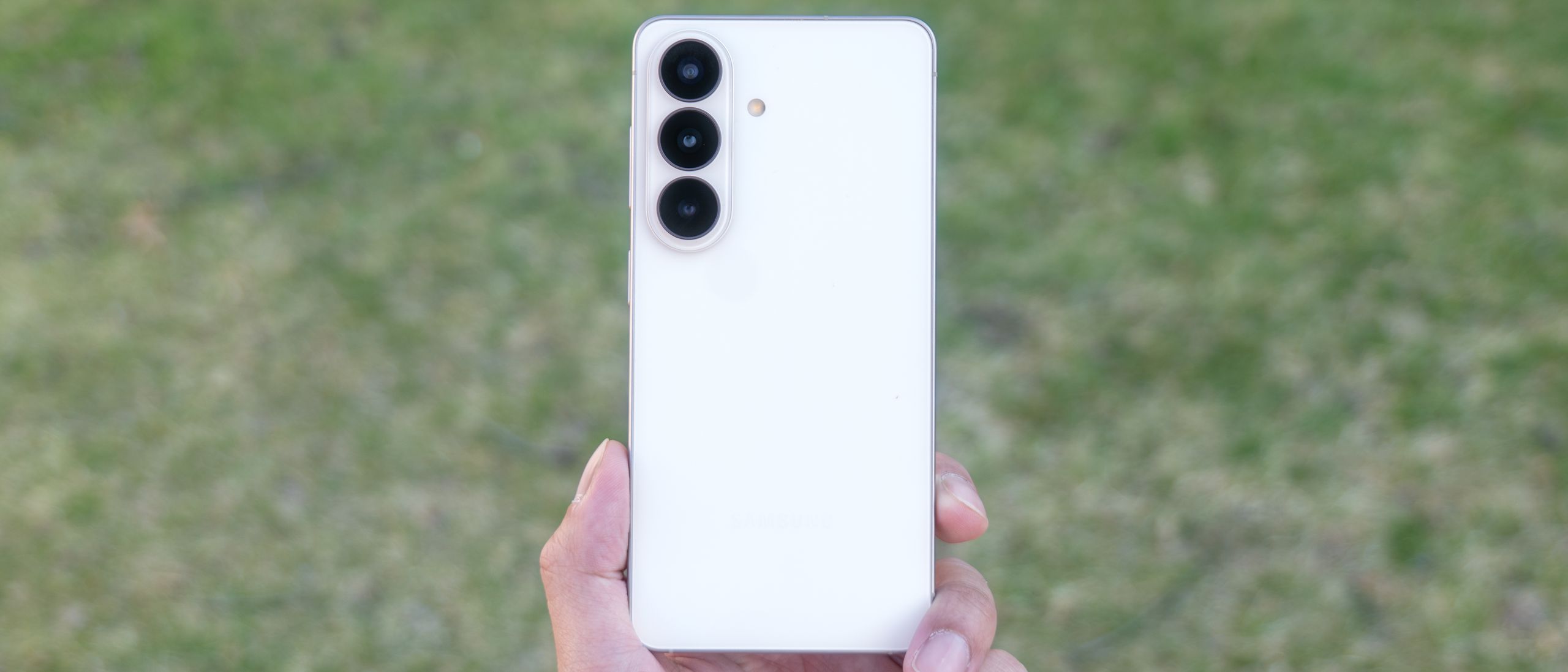
Right from the jump, the Galaxy S26 has a tough job trying to convince people it’s the best phone on the market. That’s because this year’s base flagship model sees a $100 price increase — which at $899 — is a tougher sell against direct rivals like the iPhone 17 and Pixel 10 (both $799).
I’ve spent a week testing the Galaxy S26 to see if its new features and upgrades make it a compelling option. Notably, it shares the same Snapdragon 8 Elite Gen 5 chip as the much more expensive Galaxy S26 Ultra while utilizing the same set of “Agentic AI” features designed to make the device more aware of your habits.
Samsung Galaxy S26 review: Specifications
| Header Cell – Column 0 |
Galaxy S26 |
|---|---|
|
Price |
$899 / £879 / AU$1,549 |
|
Display |
6.3-inch AMOLED (2340×1080) |
|
Refresh Rate |
1-120Hz |
|
Chipset |
Snapdragon 8 Elite Gen 5 / Exynos 2600 |
|
RAM |
12GB |
|
Storage |
256GB / 512GB |
|
Rear Cameras |
50MP( f/1.8) main, 12MP (f/2.2) ultrawide, 10MP (f/2.4) telephoto w/3x optical zoom |
|
Front camera |
12MP (f/2.2) |
|
Battery |
4,300 mAh |
|
Charging Speed |
25 wired, 15W wireless |
|
Dimensions |
5.89 x 2.82 x 0.28 inches (149.6 x 71.7 x 7.2 mm) |
|
IP Rating |
IP68 |
|
Colors |
Cobalt Violet, Sky Blue, Black, White (online exclusive: Silver Shadow, Pink Gold) |
Samsung Galaxy S26 review: Pros
Horizon Lock keeps videos impressively steady

No other feature catches my attention more than the new Horizon Lock. While the Galaxy S26 offers other phenomenal camera modes — like 8K video recording — Horizon Lock is far more practical for most people.
As a videographer, I appreciate how Horizon Lock keeps my footage perfectly level. It’s not just applying stabilization when my hand shakes, it also compensates for significant rotation. The difference is dramatic, as you can see in the videos above.
However, the one downside to using Horizon Lock on the Galaxy S26 is that it tops out at QHD resolution, rather than 4K.
Larger, brighter screen

The Galaxy S26 gains a larger 6.3-inch AMOLED display, which somehow manages to keep the phone’s overall size and weight largely unchanged from the previous Galaxy S25. I watched a couple of episodes of “Spartacus: House of Ashur” and was impressed by the vivid colors and contrast — the 120Hz refresh rate makes the action sequences look incredibly smooth.
| Row 0 – Cell 0 |
Galaxy S26 |
iPhone 17 |
Galaxy S25 |
Pixel 10 |
|
Display size |
6.2-inch AMOLED |
6.3-inch OLED |
6.2-inch AMOLED |
6.3-inch OLED |
|
sRGB (%) |
147% (Vivid) / 128.9 % (Natural) |
111.3% |
152.7% (Vivid) / 129.4% (Natural) |
125.7% (Adaptive) / 106.6% (Natural) |
|
DCI-P3 (%) |
104.1% (Vivid) / 91.3% (Natural) |
80.2% |
108.2% (Vivid) / 91.7% (Natural) |
89% (Adaptive), 76.9% (Natural) |
|
Delta-E |
0.24 (Vivid) / 0.23 (Natural) |
0.20 |
0.25 (Vivid) / 0.31 (Natural) |
0.29 (Adaptive) / 0.30 (Natural) |
|
Peak Brightness |
1,950 nits |
1,505 nits |
1,789 nits |
2,333 nits |
What’s even better is that this larger panel is much brighter at 1,950 nits, making it easy to comfortably watch shows outside, even in direct sunlight. In comparison, the Galaxy S25 and iPhone 17 top out at 1,278 and 1,505 nits, respectively.
Outstanding gaming performance

If there’s one thing I love about Samsung’s approach to its flagship models, it’s that it uses the same chip across the entire lineup. This means the base S26 shares the same Snapdragon 8 Elite Gen 5 chipset found in the Galaxy S26 Ultra — and it absolutely makes gaming a joy.
| Row 0 – Cell 0 |
Galaxy S26 |
iPhone 17 |
Galaxy S25 |
Pixel 10 |
|
Processor |
Snapdragon 8 Gen 3 Gen 5 |
A19 |
Snapdragon 8 Gen 3 |
Tensor G5 |
|
Geekbench (single core/multicore) |
3,531 / 10,778 |
3,701 / 9,460 |
2,916 / 9,886 |
2,345 / 6,581 |
|
WildLife Original Unlimited (fps) |
171.6 |
130.97 |
158.02 |
80.58 |
Powerful new AI photo editing tools

Image 1 of 2


This tool is part of the updated Photo Assist suite on the Galaxy S26, which also lets me generate new elements, remove reflections, and erase objects using generative AI. I tried it out, and the results were not only accurate to my prompts but also remarkably realistic. It even manages to keep the camera strap around my shoulder.
Now Nudge offers convenient suggestions

Samsung is clearly investing a lot of effort into Galaxy AI, and the S26 is no exception. I previously feared certain features would be exclusive to the Galaxy S26 Ultra, but that isn’t the case because the entire lineup receives the same suite of AI tools packaged within the One UI 8.5 experience.
One of the most ambitious features within this “Agentic AI” experience is Now Nudge. What makes it special is that it works quietly in the background, so I’m never forced to trigger it manually. Now Nudge essentially picks up context from the screen to provide helpful actions — like suggesting I check my calendar when someone texts me about lunch. It feels like a feature that will only get better the more I use the phone.
Samsung Galaxy S26 review: Cons
Largely unchanged camera performance

Camera performance is always high on my list, so I’m somewhat disappointed by the lack of meaningful hardware improvements. Don’t get me wrong, it still captures amazing photos — but I was hoping for a performance boost to widen the gap between this and the previous model.
The most notable change is the design: the triple camera system now protrudes significantly more within its new pill-shaped bump. This array houses the familiar 50MP main camera, 12MP ultrawide, and 10MP telephoto with 3x optical zoom, while a 12MP selfie camera sits up front.
In my testing, the only consistent difference I see against the Galaxy S25 is that images come out ever so slightly brighter. However, the detail, definition, and color temperature remain largely the same.
Image 1 of 15


Battery life could be better
| Row 0 – Cell 0 |
Galaxy S26 |
iPhone 17 |
Galaxy S25 |
Pixel 10 |
|
Battery size |
4,300 mAh |
N/A |
4,000 mAh |
4,970 mAh |
|
Battery life (Hrs:Mins) |
11:28 |
12:47 |
15:43 |
13:13 |
|
Wired Charging |
25W |
29W |
25W |
30W |
|
Recharge percentage (15 mins) |
29% |
39% |
28% |
26% |
|
Recharge percentage (30 mins) |
57% |
71% |
57% |
52% |
Along with a larger display, Samsung has increased the battery capacity to 4,300 mAh — up from the Galaxy S25’s 4,000 mAh cell. However, its battery life actually clocked in shorter during our battery drain test, with an average time of 11 hours and 28 minutes. To be fair, the Galaxy S25 was tested using an older version of the Tom’s Guide battery drain test, which may account for the discrepancy.
Compared to the iPhone 17, however, the Galaxy S26 isn’t too far off — but my real-world experience reflects our benchmark findings. The endurance feels rather short compared to other phones I’ve recently tested. It’s still more than enough to get me through a normal workday with a little left in the tank, but I was hoping for more.
Samsung Galaxy S26 review: Verdict

If you’re like me and prefer to avoid the massive footprint of top-of-the-line flagships, the Galaxy S26 packs heavyweight power into a lightweight, easy-to-carry form factor. Upgrades like the larger (and brighter) display, Snapdragon 8 Elite Gen 5 chip, and new Galaxy AI features certainly help make it a competent device I’d feel confident using as my daily driver — but that $100 price increase makes it a less attractive option.
There’s no denying it offers a well-rounded package, but the new $899 starting price makes it a tough recommendation when the OnePlus 15 sits at the same price point, and the iPhone 17 Pro and Pixel 10 Pro are only $100 more at $999. Ultimately, it feels like you’re overpaying for the Galaxy S26 when those more premium options are within such close reach. Well, that’s unless you value its much lighter design.

Follow Digitpatrox on Google News and add us as a preferred source to get our up-to-date news, analysis, and reviews in your feeds.
More from Digitpatrox
Source link
